
The University of Nigeria, Nsukka is intensifying efforts to equip its students and researchers with the capacity to develop artificial intelligence (AI) technologies and apply them to real-world challenges, rather than merely consume technologies developed elsewhere.
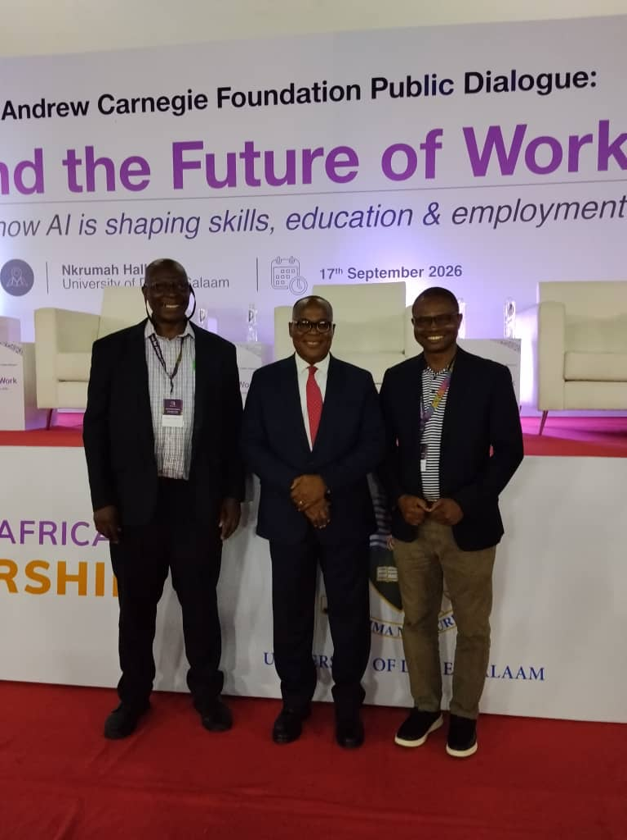
The Vice-Chancellor of the University, Prof. Simon Uchenna Ortuanya, stated this while leading a UNN delegation to the 2026 Annual Meeting of the Alliance for African Partnership (AAP), hosted by the University of Dar es Salaam, Tanzania, from September 15 to 19, 2026.
Prof. Ortuanya said the University was already repositioning its teaching, research and innovation ecosystem to prepare students for a future of work increasingly shaped by AI and other emerging technologies.
According to him, UNN’s objective is to produce graduates with the technological competence, creativity and problem-solving capacity required not only to use AI tools but also to create and deploy AI-driven solutions to complex problems confronting Nigeria and Africa.
The University of Nigeria must move beyond producing graduates who simply use technologies developed elsewhere to building the capacity to create technologies and innovations that address Nigeria’s and Africa’s development challenges,” Prof. Ortuanya said.
The Vice-Chancellor said the effort was consistent with his administration’s focus on teaching excellence, cutting-edge research, innovation, entrepreneurship and digital transformation.
He noted that the changing nature of work required universities to rethink how students are trained, with greater emphasis on technological competence, interdisciplinary collaboration, creativity and practical problem-solving.
The UNN delegation to the meeting included the Deputy Provost, College of Postgraduate Studies, Prof. Phillip C. Mefoh, and the University’s AAP Focal Point, Prof. Ozoemena Ani.
The meeting, themed “Reimagining Higher Education for Africa’s Future: Leadership, Innovation, and Global Partnerships,” brought together higher-education leaders from 12 institutions across 10 African countries, alongside Michigan State University, United States.
Discussions at the meeting focused on the future of African higher education and the role of universities in responding to rapid technological change, particularly in artificial intelligence, research and innovation, graduate education, entrepreneurship, institutional capacity and strategic global partnerships.
The engagement provided an opportunity for UNN to deepen its ongoing efforts to connect academic training and research with technological innovation and societal impact.
A major area of emphasis at the meeting was the need for African universities to move beyond knowledge generation to the development of practical solutions through research, innovation, leadership and equitable global partnerships.
This direction is already reflected in UNN’s engagement with AAP. In 2026, ten UNN postgraduate students and their supervisors received support through the AAP’s funding programme to advance research in artificial intelligence.
The funding opportunity provided a platform for strengthening AI research capacity among the University’s postgraduate students and supervisors while contributing to the development of research outputs in an emerging area of global importance.
The AAP meeting also reinforced the importance of building interdisciplinary innovation ecosystems that bring together expertise from fields including engineering, medicine, agriculture, computing, social sciences and education to address complex societal challenges.
The meeting further highlighted the need for universities to ensure that international partnerships generate concrete outcomes, including joint research, postgraduate training, technology development, mobility, funding, laboratory development and policy engagement.